29th September 2026
AI risks reinforcing gender imbalance in manufacturing businesses unless adoption is more inclusive, report warns
New Beko research explores how AI could reshape work for women in UK manufacturing businesses – and why responsible adoption matters now.
- 41.1% of women’s employment in UK manufacturing is in occupations exposed to generative AI, compared with 23.6% of men’s
- Women represent 63.4% of workers in the manufacturing occupations most exposed to generative AI
- New Beko-commissioned report calls for responsible AI adoption that supports greater gender equality in UK manufacturing
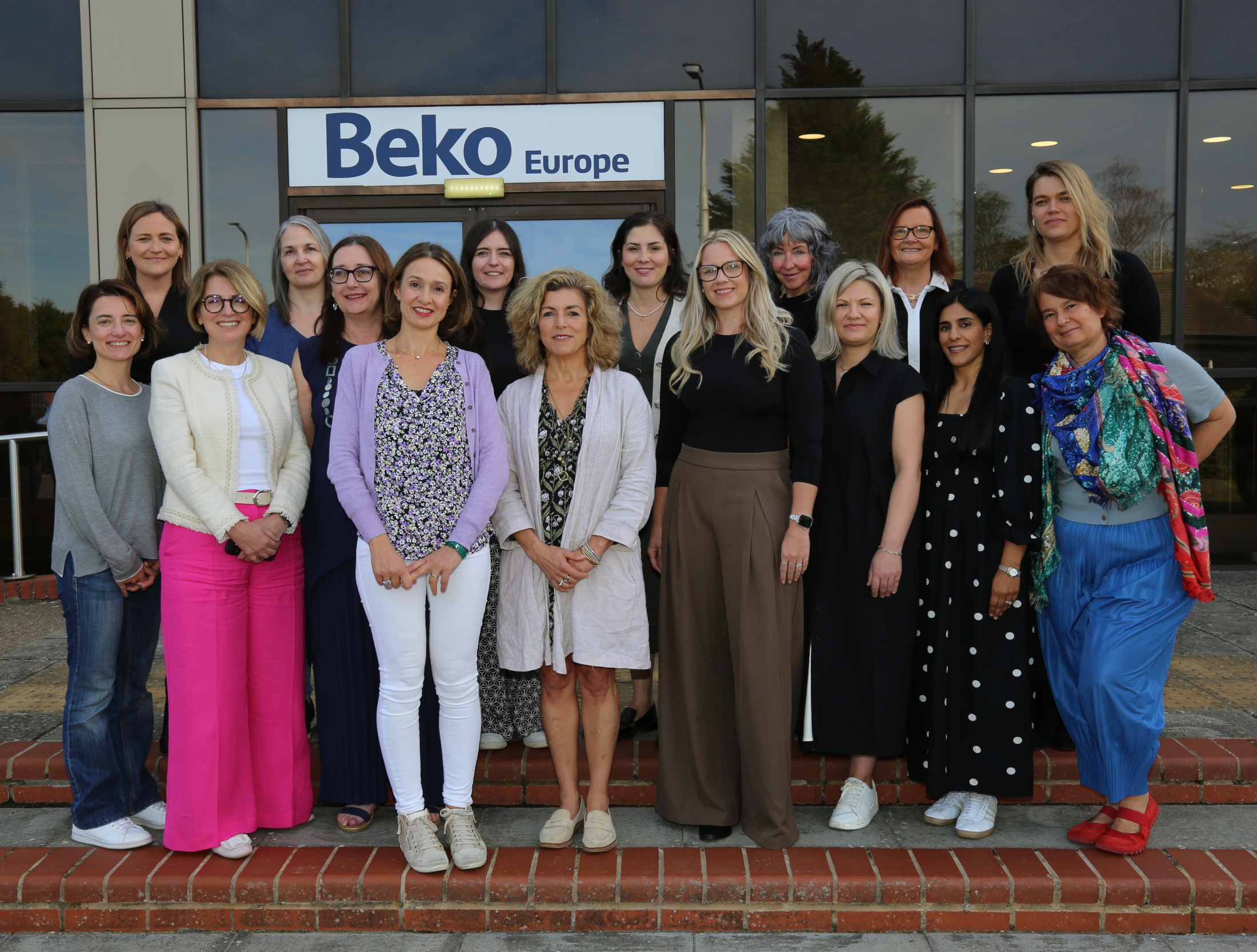
AI has significant potential to make manufacturing businesses more productive, efficient and responsive to customers. But it is being introduced into a workforce where inequalities already exist, which means its impact cannot be assumed to be the same for everyone.
At Beko, we are still exploring how AI can best support our people and our business. We commissioned this research because we wanted to better understand the implications of the technology before it becomes more deeply embedded in everyday ways of working. Our goal is for greater adoption of AI and greater female representation in manufacturing businesses to be mutually reinforcing ambitions, supporting both productivity and inclusion rather than forcing business to choose between them.
Women working in UK manufacturing are disproportionately represented in occupations exposed to generative AI, according to new research commissioned by Beko. Importantly, exposure does not mean job loss. It means the tasks within a role have greater potential to be supported or transformed by generative AI.
The new report, The Default Setting: Women, AI and the Future of Work in UK Manufacturing, explores how AI adoption could affect women and men differently as the technology becomes more widely used across the sector.
It finds that an estimated 41.1% of women’s manufacturing employment is in occupations exposed to generative AI, compared with 23.6% of men’s.
Women currently account for 27.8% of the UK manufacturing workforce but represent 63.4% of those working in the occupations with the highest exposure to generative AI.
How AI could affect women in UK manufacturing
The research makes clear that AI exposure does not mean jobs will disappear. Instead, it indicates that tasks within particular occupations have the potential to be transformed or augmented by generative AI.
The most exposed roles are predominantly in areas such as administration, sales and customer service, where women make up a greater proportion of the manufacturing workforce.
Zoi Roupakia, Founder and Director of Noetic AI and author of the report, said:
“It's important to be clear that this report does not conclude that AI is taking women's jobs in manufacturing. Rather, it shows that women are disproportionately represented in some of the occupations most exposed to AI-driven task change, which could affect how they work.”
“Adoption remains at an early stage, so the decisions that will determine whether AI widens or narrows opportunities for women are being made now, in how employers introduce the technology, redesign work and govern these systems.”
Women report greater concerns about AI bias and workplace equality
The study also identifies differences between how women and men working in manufacturing view the potential impact of AI.
Women are more likely than men to believe AI bias could negatively affect employee wellbeing (41.1% vs 28.7%), pay and job opportunities (33.3% vs 22.9%) and diversity and inclusion (27.7% vs 17.1%).
They are also less likely to trust AI-driven decisions (32.1% vs. 42.9% of men).
Across the workforce, there is strong demand for greater clarity around the technology. Some 58% of respondents are unaware of any measures their company is taking to address AI bias, while 87% of both women and men want AI systems to be more transparent.
Building responsible and inclusive AI in manufacturing
Teresa Arbuckle, Regional Managing Director of Beko UK & Ireland, said:
“AI, used in partnership with human expertise and decision making, presents a significant opportunity to help manufacturing businesses become more efficient and productive. But this should not come at the expense of progress on women’s representation.”
“We need to take everyone on this journey, regardless of gender, and we want to see more women enter manufacturing and continue to progress into leadership and specialist roles”
The report sets out practical recommendations for manufacturers on adopting AI responsibly, including considering its impact on different employee groups, maintaining human oversight of AI-supported decisions and providing employees with appropriate training and development.
Beko UK has reviewed the recommendations and is using the findings to strengthen its existing responsible AI and people policies, building on governance and principles that are already in place.
Teresa added:
“As the world of work changes and we seek to unlock the benefits of AI for our business and our customers, we are continuing to strengthen the policies, training and support available to our people.”
“It is essential that the progress we have made on women’s representation is embedded into the new processes and technologies that we adopt.”
The Default Setting combines a survey of 890 UK manufacturing professionals with analysis of ONS employment data and ILO occupational AI exposure data, alongside a review of international evidence on AI and women’s careers.
Download The Default Setting: Women, AI and the Future of Work in UK Manufacturing by clicking on the button below
For PR enquiries please email [email protected]
Latest News Articles
29th September 2026
AI risks reinforcing gender imbalance in manufacturing businesses unless adoption is more inclusive, report warns
New Beko research explores how AI could reshape work for women in UK manufacturing businesses – and why responsible adoption matters now.
3rd March 2026
Beko and ClwydAlyn recognised by WRAP Cymru for circular leasing model
We're delighted to share that our long-standing work with ClwydAlyn Housing Association has been highlighted in a new case study by WRAP Cymru, the respected NGO driving circular economy thinking and sustainable procurement across Wales.

17th February 2026
One in three UK households limiting appliance use as energy costs become top environmental concern
Beko's Smart Living Index tracks how consumers across 12 countries view sustainability and how energy use is evolving, it also looks at how consumers are using smart appliances within their own homes.